

Functional Training & Hockey
My Training Journey
With the off season under way I am turning my focus to training and prep for next season. In doing so, I want to share my journey in finding the best methods for training which led down many rabbit holes, experiments, and ultimately led to a mix of a few different functional training protocols.
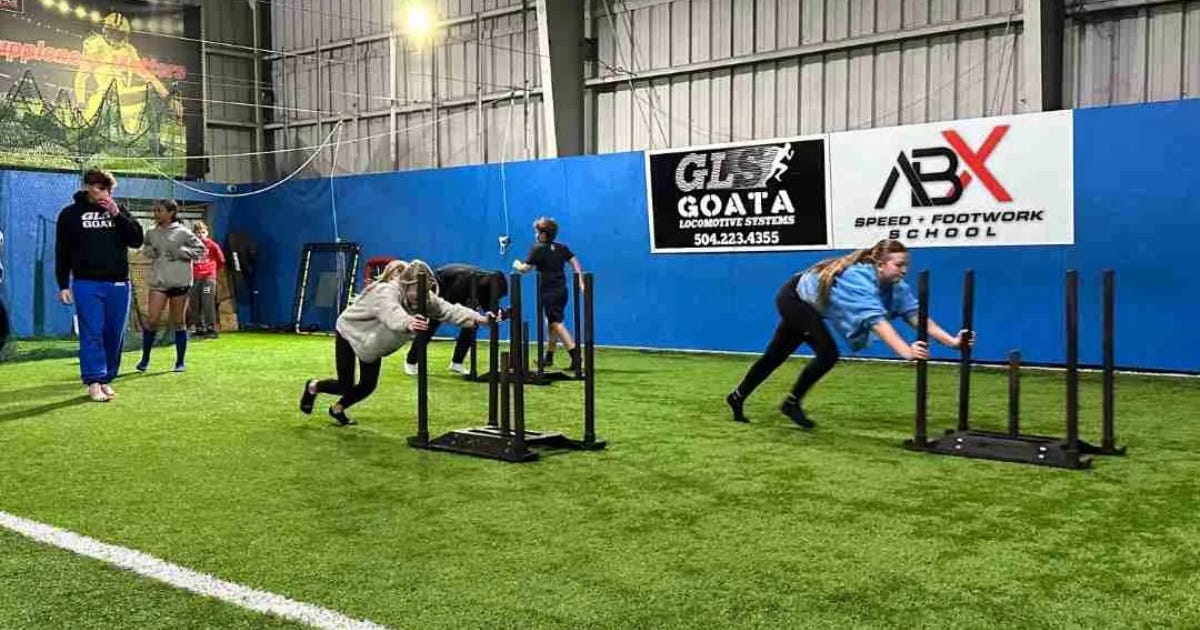
My jump into the functional training world began after I got a serious injury. I tore my adductor longus off the origin at the pelvic bone. This happened in playoffs so my season was over. I was sent to many specialists after this injury and the consensus was that there was no surgery available to fix it and reconnect the muscle to the bone. My body would have to do that over time.
It was tough news, knowing that it would be a long, painful journey to recovery. But I am proud of the fact that I only missed a month of the following season. Which is a short amount of time for an injury like this.
There are two things I credit for the short recovery time. The first, I definitely wasn’t completely healed. As a young athlete I was overly optimistic, scared to lose my job, and didn’t communicate well with the doctors and trainers. The result was a season in which I constantly felt pain and pushed through it to keep my job. But I did a lot of things to reestablish strength in my groin.
That brings me to the second part of what helped me. Immediately after the injury I dug deep on different functional training methods. I used these to help develop strength during a long grueling season.
The three main methods I found were ELDOA, Functional Patterns, and GOATA. I traveled to meet with the guys to created these methods. And what I discovered was each of these methods has both strengths and weaknesses. Areas that helped and some that really didn’t do much at all. In this article I want to explain everything I learned from these training methods.
ELDOA
This is an interesting training method that does more for injury prevention, flexibility, and building the tiny muscles around joints than it does for speed or strength.
ELDOA is about holding specific poses and doing precise movements that create space around joints and specifically help with the spine. Using the breath and rhythmic movements, you target specific muscles around the joints to make space and in doing so you work those muscles to fatigue. The method targets the deep fascia. It includes methods to release muscles you don’t even realize you have. To me, it was similar to yoga but with a more intense, focused twist.
It may sound easy, but it was extremely challenging for me. The summer after my injury I flew to Dallas to meet with Scott Herrera, who is an ELDOA wizard. In the week I was there I think I was on the verge of tears at least once a day. Thats how difficult these movements were. And do be totally honest, I think something about these movements releases trauma. Because I would leave training sessions having deep thoughts about my life, my past, and my future. I could write a hole post about my time in Dallas and what I learned.
All told, ELDOA was an experience for me. It’s not something I use regularly, but if I have stiff joints or my back is sore, I go back to some of the poses and exercises I learned in Dallas.
Functional Patterns
I found this online and saw that a couple MMA fighters were using this method to train because of its benefits with body mechanics. Knowing that I had inconsistencies in my movement made this very attractive to me.
Functional Patterns was started by a passionate and opinionated guy named Naudi Aguilar. I saw his videos online that show cased Functional Patterns. FP is all about getting the body to move as on connected system. It has a huge focus on creating this unity through the core muscles. The training involves walking, running, and lots of twisting movements. For me It was hard to tell if FP was all the rage or if Naudi was just very proud of his creation. So I had to try it.
Two summers after I had the injury I found a Functional Patterns specialist in the area I was living and spent a whole summer training with this protocol. The training involved a lot of work with a cable machine and a large medicine ball. Also lots of video. I would have ankles or wrists attached to a cable on the machine and walk forward and back. Do video of the walking. And review to perfect the movement. Sounds funny and it was, but I did feel I was learning a lot about how to move like a human without favoring a previously injured limb. There was also a lot of medicine ball throwing, filmed treadmill runs, and fascia release with softballs.
Ultimately, I never felt like FP really transferred to what I am trying to do on the ice. I think it’s more for sports that involve running or grappling, not skating. With that said, I felt like my body was upgraded from repetitive, precise movements with resistance.
GOATA
I found GOATA online after discovering a few NFL players at the time were using it to increase strength output and limit injuries. The focus on proper biomechanics and increasing power appealed to me.
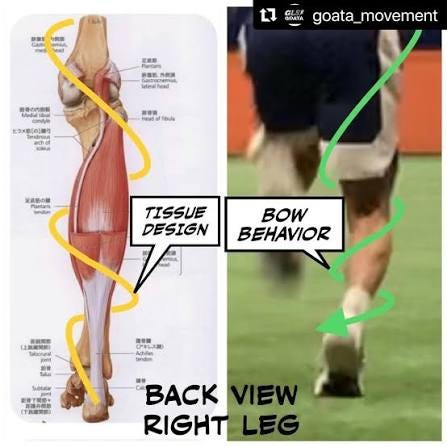
GOATA is an acronym for greatest of all time actions. It was developed by a group of trainers in New Orleans. These guys studied the movement patterns of all life, but specifically the movements of many of the best athletes (Jordan, Brady, Stockton, to name a few), predatory animals (bears, lions, etc.), indigenous people, and infants. What they discovered was that most everything moves in spirals. Waves, flames, wind, and yes animals. Nothing moves in a straight line. But many of the day to day activities we do as humans force us to move in unnatural straight lines. The chairs we sit in, for example, don’t cater to the spiral structure of our musculature. So we develop unnatural gaits and movement patterns that translate onto the field (or ice). In doing so, our power out put is decreased and injuries increase. What GOATA training does is reintroduce movements using the spiral make up of muscles. So you are strengthening muscles in the natural way they are built. I’ll give an example to hopefully make this more clear. The legs are naturally a bow. A natural gait (as seen in the indigenous tribes and infants learning to walk) spirals out and up (see photo below). GOATA takes the spiral concept and incorporates it into training for your sport.
For me GOATA was a game changer. I began training with this method three years after my injury. I flew to New Orleans to meet with the GOATA crew and learn more about it. It feels very primal to train this way. To me it feels the most efficient way to train. My strength increased, my jumping got higher, and I felt my best in the shortest amount of time. I have added a lot of GOATA movements into my daily routines and warmups and will turn any exercise I can into a GOATA movement.
Thank you for taking the time to read this. If you have any questions about any of these methods ask below. I could do a write up on each one specifically if there is enough interest.
Would appreciate if you would be able to share more specifics about your current offseason workouts. What is your warmup? What exercises are you using to incorporate GOATA? Frequency? Reps? Weights? Bands? Equipment? What is your cardio routine. How do your workouts shift once the season approaches? Would like to understand more about your weekly routine. How do your workouts compare to other teammates?
It sounds like you use ELDOA more for injury recovery, therefore can you given examples of an injury you have healed and the specifics of what that program looked like.